
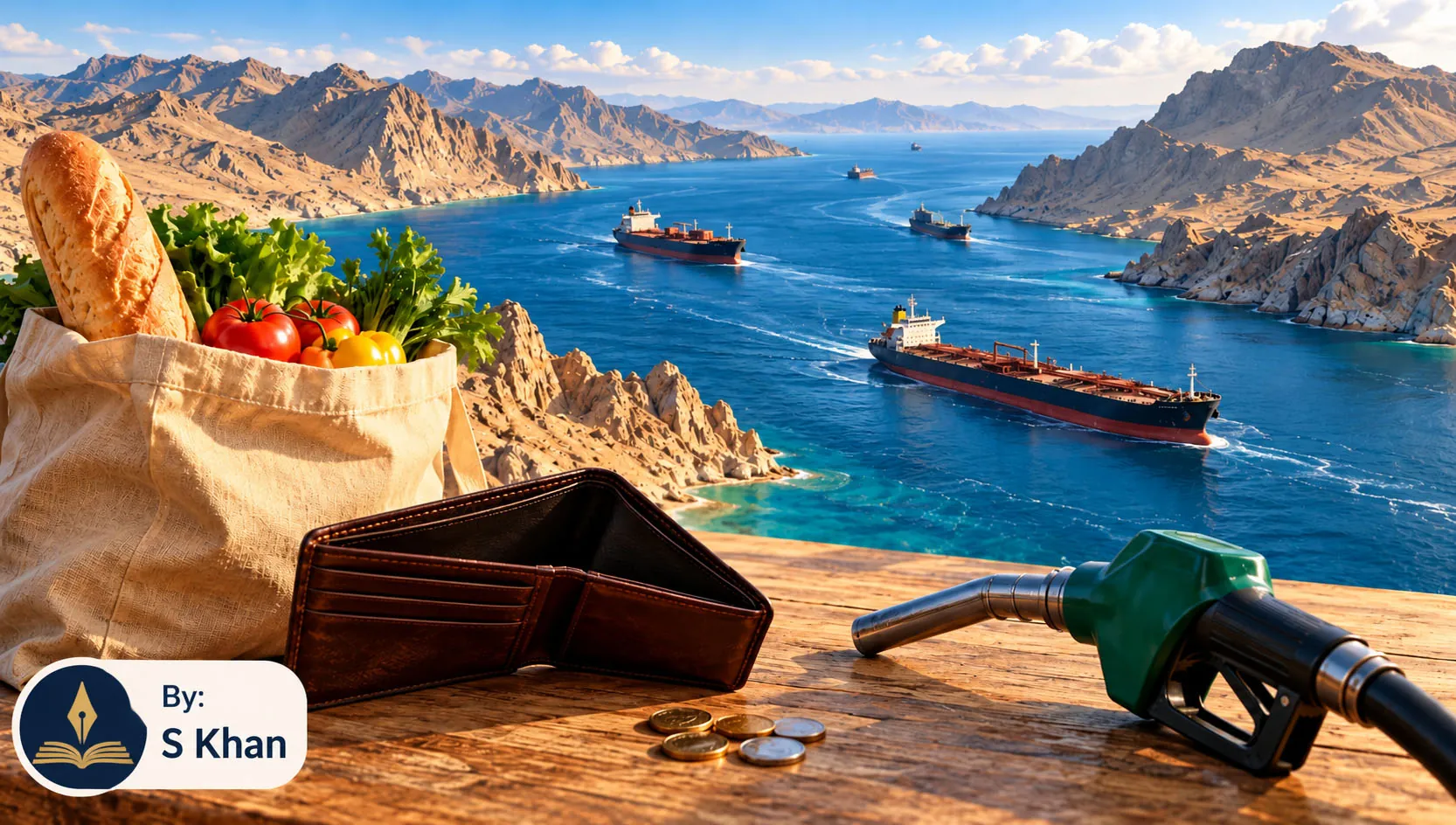
The Hormuz Crisis: How a Narrow Waterway Can Affect Your Household Budget
A shipping crisis may seem distant, but disruptions to major sea routes can affect fuel bills, food prices and family incomes worldwide.
UN agencies warn that the Hormuz crisis is increasing energy costs, slowing shipping and creating financial pressure, particularly across Asia and developing economies.
Why Does the Strait of Hormuz Matter?
The Strait of Hormuz connects the Persian Gulf to the Gulf of Oman and the Arabian Sea. Before the crisis, approximately one-fifth of global oil supplies—around 20 million barrels daily—passed through this narrow waterway, alongside liquefied natural gas and industrial raw materials.
According to UN News, daily ship traffic fell to between two and 16 vessels during the reported week, compared with more than 100 ships before the crisis.
This disruption has increased energy, transport and insurance costs.
How Higher Costs Reach Your Home
Expensive fuel and shipping can raise the prices of food and everyday goods.
UN agencies reported rising inflation across parts of Asia. Pakistan’s inflation increased from 7.3 per cent in March to 10.9 per cent in April. In Laos, inflation rose from 6.2 per cent in February to over 10 per cent in April.
These figures represent overall inflation, not identical price increases for every product. Nevertheless, families face growing pressure on household budgets.
A Weaker Currency Adds More Pressure
Several regional currencies have weakened against the US dollar, while borrowing costs have increased.
In Nepal, one US dollar reached approximately 154.5 Nepalese rupees, nearly 10 rupees higher than in early February. This makes imported goods more expensive.
ESCAP warned that many developing countries hold fuel reserves covering less than three months of imports, increasing their vulnerability to prolonged disruption.
Jobs and Family Income Are Also at Risk
The International Labour Organization warned that expensive energy, weaker tourism, reduced migration and slower trade threaten employment.
If oil prices remain approximately 50 per cent above their early 2026 average, global working hours could decline by 0.5 per cent in 2026 and 1.1 per cent in 2027.
These projected reductions equal approximately 14 million and 38 million full-time jobs respectively. They represent potential lost working hours, not confirmed job losses.
Declining labour deployments to Gulf countries and weaker remittance flows could also affect families dependent on overseas earnings.
Vulnerable Families Face the Hardest Choices
Myanmar demonstrates how rising costs can worsen humanitarian difficulties.
According to the World Food Programme, nationwide fuel prices tripled since late February, while basic food basket costs increased sharply.
One in four people in Myanmar were reported to be acutely food insecure.
Higher fuel and fertilizer prices also threaten the upcoming monsoon planting season, potentially increasing difficulties for farming communities.
Conclusion
The Hormuz crisis demonstrates how disruption in one narrow waterway can affect households worldwide.
Higher energy costs can increase food prices, weaken currencies, threaten jobs and reduce family income.
Future economic damage remains uncertain, and UN projections are possible scenarios rather than confirmed outcomes. However, rising prices and reduced shipping traffic show that vulnerable households are already experiencing financial pressure.
Category: International News and World Politics
News Source: United Nations (UN News)
Published: May 2026
Original News: United Nations News – Hormuz Crisis
Additional Sources:UN ESCAP, International Labour Organization (ILO), and World Food Programme (WFP)