
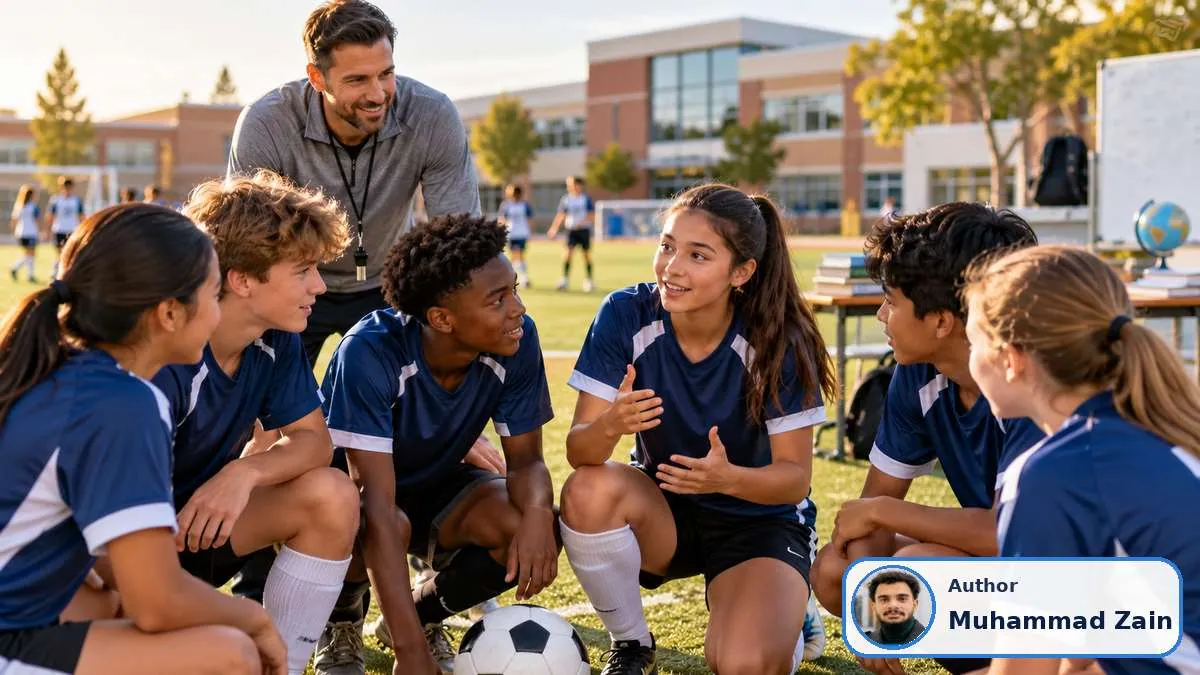
How Team Sports Build Better Leaders in the Classroom
Leadership is not something students learn only from textbooks or classroom lessons. Sometimes, important leadership skills develop on the sports field, where students work together, make decisions and face challenges as a team.
Games such as football, basketball and cricket offer opportunities to practice communication, responsibility and cooperation. According to articles published by Edutopia and BLS World School, team sports can help students develop social and leadership skills that may also be useful in their academic lives.
Every sports team needs players who can take responsibility. A team captain may guide teammates, make decisions and encourage others during difficult moments.
However, leadership is not limited to captains. Students can also show leadership by helping teammates, accepting mistakes and supporting the group.
BLS World School explains that giving students responsibilities during sports activities can help them practise accountability and decision-making. These experiences may prepare them for similar responsibilities during classroom projects and group activities.
In team sports, individual success is often connected to the performance of the whole group. Players must communicate, trust one another and understand their different roles.
The same principles can be useful in the classroom. During a group assignment, students need to share ideas, listen to others and work toward a common result.
An article by Edutopia identifies cooperation, patience and respect as important skills that team sports can help develop. Such qualities may make it easier for students to participate positively in classroom teamwork.
Some students find it difficult to express their opinions or speak in front of others. Team sports provide regular opportunities to communicate with teammates and coaches.
Players learn to explain their ideas, listen to instructions and respond to feedback. They also practise understanding body language and communicating during stressful situations.
Edutopia highlights both spoken and unspoken communication as important parts of successful teamwork.
These experiences may help students become more comfortable sharing ideas, asking questions and participating in classroom discussions.
Sports often require quick decisions. A football player may need to choose between passing the ball and attempting a goal, while a basketball player must decide how to respond to an opponent.
These situations encourage students to think carefully, assess their options and take responsibility for their choices.
The same ability can be valuable during school presentations, group projects and other academic challenges.
Although playing sports does not automatically make someone a better decision-maker in every situation, it provides opportunities to practise making choices under pressure.
Winning a match can bring excitement, but losing can also offer an opportunity to learn.
Students may discover the importance of accepting mistakes, respecting opponents and continuing to work toward improvement.
BLS World School describes how coaches encourage students to reflect on defeats and learn from their experiences.
This approach may also benefit classroom learning. When students receive disappointing marks or struggle with a difficult subject, they can apply a similar attitude by reviewing mistakes and trying again.
Students who participate in sports often need to balance training, competitions, homework and examinations.
Managing these responsibilities requires planning and discipline.
Edutopia identifies time management as an important skill associated with student participation in sports.
By organising their schedules and understanding their priorities, students may develop habits that support both academic work and sporting commitments.
However, balancing these activities successfully also requires realistic expectations and appropriate support.
Teachers and coaches can help students recognise the value of lessons learned through sports.
BLS World School reports that its sports programme uses activities such as rotating team captaincy and encouraging quieter students to participate. These are examples of how schools can create leadership opportunities for different students.
Classroom teachers can also encourage similar behaviour by allowing students to share responsibilities during group work.
When students have opportunities to lead, listen and cooperate, leadership becomes something they practice rather than simply study.
Team sports can offer students much more than physical exercise and competition. They provide opportunities to build confidence, communicate clearly, accept responsibility and work with others.
These abilities are valuable on the playing field and may also support students during classroom discussions, group assignments and academic challenges.
While sports participation alone does not guarantee strong leadership or better grades, it can provide useful experiences that support personal development.
By encouraging teamwork, fair play and shared responsibility, schools can help students develop qualities that may benefit them throughout their education and beyond.
Sources
1. Edutopia — Paige Maslen, The Social and Academic Benefits of Team Sports, December 29, 2015.
2. BLS World School — How Schools Develop Leadership Skills and Collaboration Through Team Sports, September 1, 2026.