
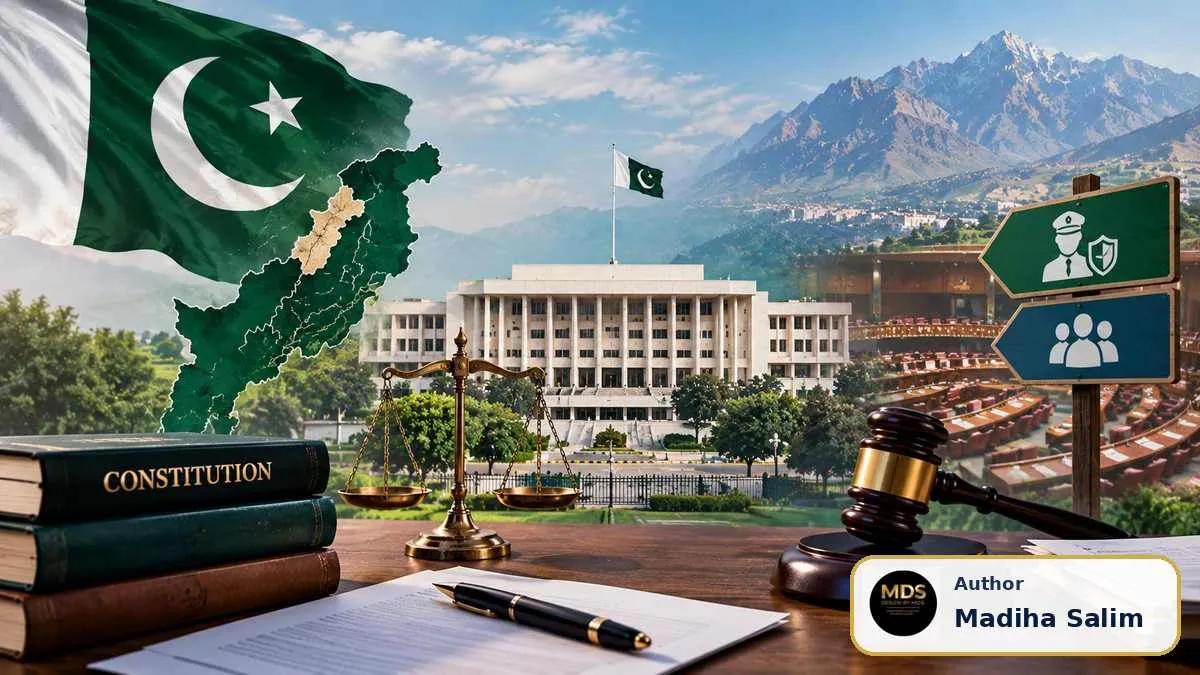
KP Emergency and Governor’s Rule: What Does It Mean for Pakistan’s Democracy?
Political decisions can have a major impact on a country’s democratic system. In Pakistan, the recent decision to impose emergency and Governor’s Rule in Khyber Pakhtunkhwa (KP) has become an important national political issue. On 15 October 2026, a joint sitting of Parliament approved resolutions relating to these measures. The decision led to strong disagreement between government and opposition members.
This development raises important questions about provincial governance, national security, parliamentary responsibility, and the role of the Constitution.
On 11 October 2026, President Asif Ali Zardari issued proclamations imposing emergency and Governor’s Rule in Khyber Pakhtunkhwa. The provincial government was led by Pakistan Tehreek-e-Insaf (PTI).
According to Dawn, Parliament’s joint sitting considered the relevant resolutions on 15 October and approved both measures despite opposition protests. Government and opposition members presented different views during the debate.
The decision placed the province’s political and administrative arrangements at the centre of national discussion.
The federal government said the security situation in KP and concerns about counterterrorism efforts made the measures necessary. Government representatives argued that the provincial administration had not provided sufficient support in the fight against militancy.
These statements represent the government’s justification for its decision. Allegations about the provincial administration’s conduct should not be treated as proven facts simply because government officials have made them.
The issue highlights the importance of public safety and effective coordination between federal and provincial authorities.
PTI rejected the federal government’s position and described the measures as unconstitutional. Its representatives denied the allegations that the party or its provincial government supported terrorism. They also said they would challenge the decision through available legal channels.
Opposition members protested during the parliamentary session. Their objections show that the decision remains politically contested.
A fair understanding of this issue requires readers to distinguish between the government’s stated reasons, PTI’s response, and facts established through official records or legal proceedings.
Parliament has an important role in examining major national decisions. Under Articles 232 and 234 of Pakistan’s Constitution, emergency and Governor’s Rule have different constitutional procedures and requirements.
Dawn reported that the joint sitting approved the relevant resolutions. However, parliamentary approval does not mean that every political allegation made during the debate has been independently proved.
During the session, JUI-F Senator Kamran Murtaza raised concerns about the evidence presented to justify Governor’s Rule. This was his objection during the debate, not a final judicial finding.
The situation demonstrates why parliamentary debate, supporting evidence, constitutional procedures, and legal review matter in a democratic system.
Provincial governance affects people’s daily lives, including public services, administration, and local decision-making. Changes in how a province is governed can therefore raise questions about accountability and representation.
At the same time, security remains a major responsibility of the state. Citizens need effective measures against violence, along with transparent decisions and respect for constitutional processes.
The challenge is to address security concerns while ensuring that political disagreements are handled through lawful and accountable institutions.
The emergency and Governor’s Rule in Khyber Pakhtunkhwa have created an important debate about security, provincial authority, and democracy in Pakistan. Parliament approved the relevant resolutions on 15 October 2026, while PTI and other opposition voices raised objections.
The government’s security arguments and the opposition’s constitutional concerns should be examined carefully rather than accepted without question. Reliable reporting, documented evidence, parliamentary accountability, and the proper legal process are essential for understanding this developing issue.
Sources: Dawn | Radio Pakistan | Associated Press