
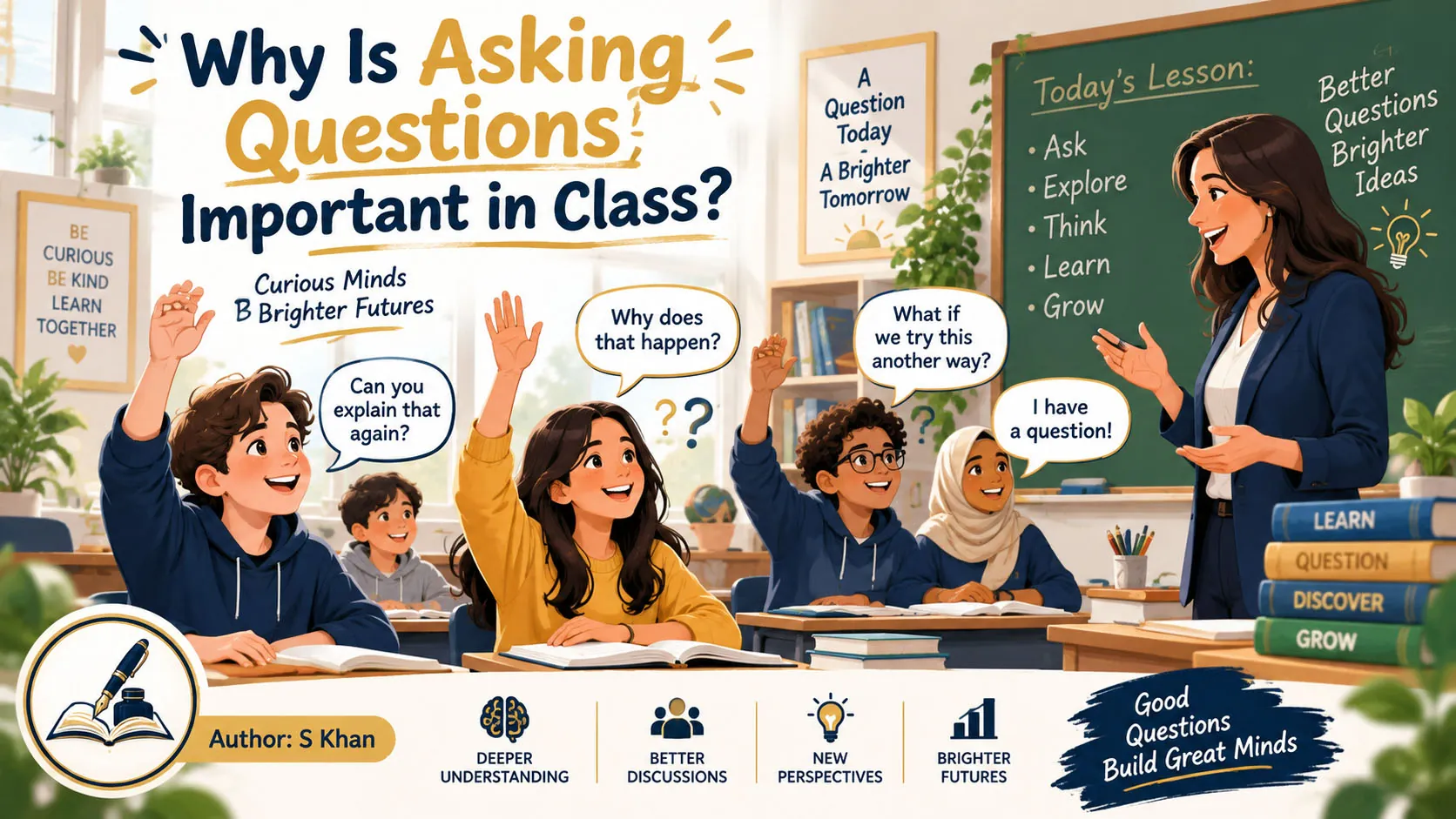
Why Is Asking Questions Important in Class?
Asking questions in the classroom is one of the most important ways of learning for students. Asking a question during a lecture supports students’ intellectual development, encourages critical thinking, fuels curiosity to learn more, and helps them clear their doubts.
Asking questions also encourages students to gain extra knowledge and helps them improve their communication. Students may also feel less hesitant to ask again if they do not understand a point the first time. It helps students get a better understanding of the topic and gives them an opportunity to clear their doubts.
If something is on a student’s mind and they ask about it, the answer may become a lesson they remember for a long time. It can improve memory retention and also support personal development.
In class, when a teacher is teaching, it is not necessary that all students understand the teacher’s point in the first attempt. A teacher may explain a difficult idea that some students do not understand properly. After a student asks a question, the teacher may explain the point with an example or in easier words, which can help students clear their doubts.
Asking questions is also an example of active learning and listening in the classroom. Instead of only listening to what the teacher is saying, when students ask questions such as “Why does this happen?”, “How does this happen?”, “What is the cause?”, or “What are its positive and negative aspects?”, it stimulates their critical thinking and gives them confidence to ask about their doubts and mistakes. They start giving their own opinions and ideas, comparing information, and trying to find reasons behind different things happening around them.
Some students may be very shy or introverted and may not have the confidence to ask questions. When another student asks about the same point, it can help those students as well by clearing their confusion.
Asking questions also boosts students’ confidence. At first, a student may feel hesitant or nervous to speak in front of others, but asking questions multiple times and participating actively in class can help reduce their nervousness. Students gradually become more comfortable expressing their ideas and opinions.
Asking questions can also help students develop research skills, deal with real-world problems, and improve their analytical reasoning. It encourages students to become lifelong learners.
In my opinion, a teacher should conduct a daily question-and-answer session for students to check their understanding and pay extra attention to those who have difficulty understanding challenging points. This can also help students overcome nervousness and freely ask questions about their doubts. It may also help them learn how to solve problems on their own.
Group discussions should also be conducted because they encourage active learning in the classroom. A classroom where students feel comfortable asking questions creates a more interesting, supportive, and effective environment for learning.