
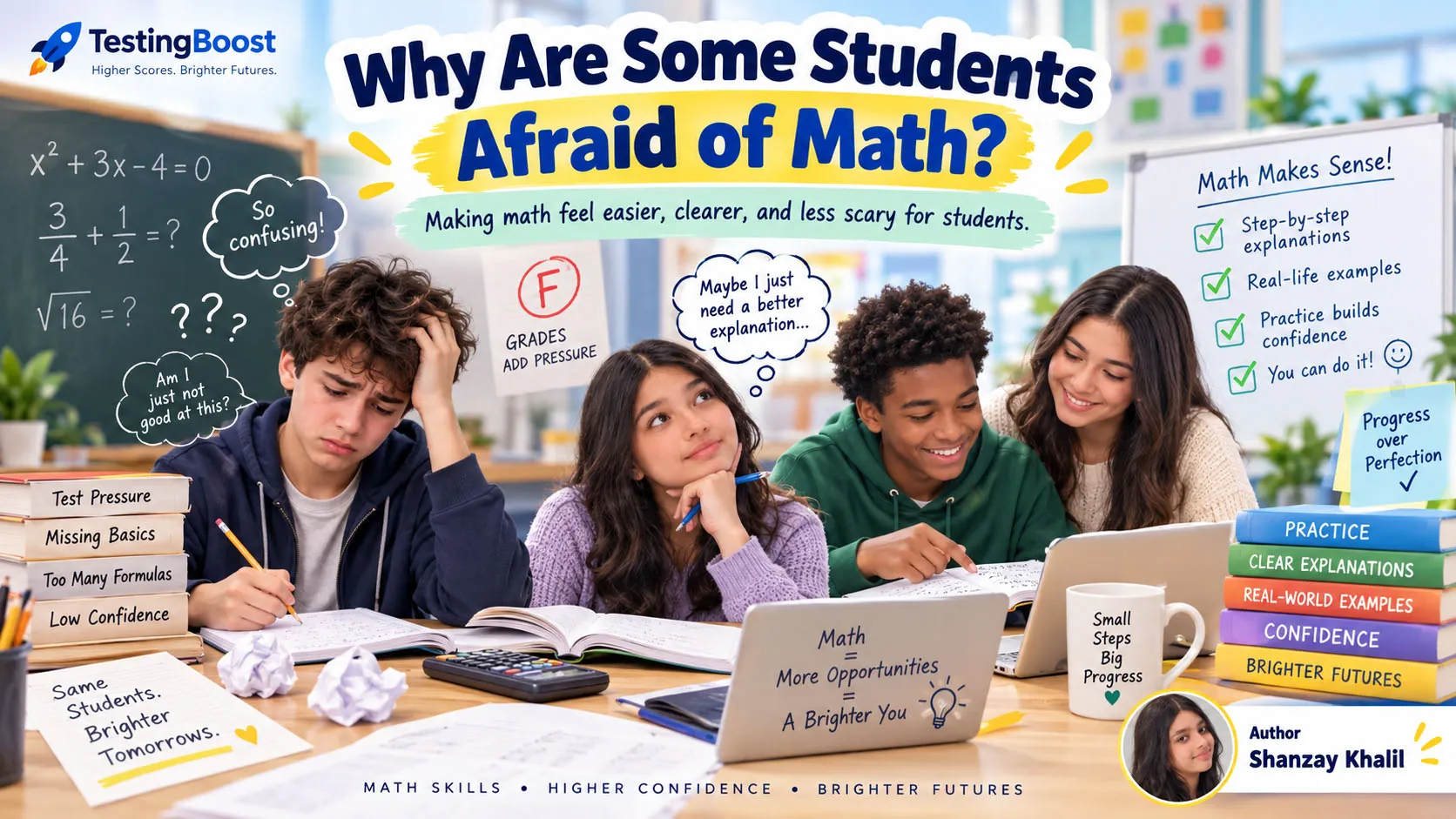
Why Are Some Students Afraid of Math?
Many students feel scared of math because it can seem overwhelming from the start. The strict rules and need for accuracy can make it feel like a puzzle with no clear starting point. Unlike subjects like history or English, where stories and discussions can make studying feel more interesting, math often presents concepts in a way that feels difficult or less engaging. This can leave students feeling lost, especially if they miss an important step early on.
Since math builds on previous knowledge, falling behind can make future topics feel much harder to understand. Mistakes, which are a natural part of learning, can also feel risky in math, especially when grades are involved. This adds pressure and can make students see math as a challenge rather than a useful subject.
Math often gets a bad reputation for being boring because some teaching methods focus heavily on memorizing formulas and repeating the same types of problems again and again. When lessons do not feel engaging, it can be hard for students to stay motivated.
For example, learning algebra may involve pages of abstract equations, but students do not always see how those equations connect to daily life, such as calculating discounts while shopping, adjusting a recipe, comparing prices, or planning a budget.
The difficulty of math is also linked to the way topics build on each other. If a student struggles with fractions in elementary school, they may later find algebra, percentages, or other topics difficult to understand. This can create a cycle where falling behind leads to frustration, and frustration leads to avoidance.
Without enough support or alternative explanations, students may struggle silently, which can strengthen the belief that math is naturally hard or impossible for them to learn.
Breaking this cycle requires rethinking how math is taught. Lessons should focus on making math more relatable, interactive, and less scary. For example, using games, practical activities, real-life examples, and different ways of explaining a concept can help students see math as a useful tool for problem-solving rather than just a series of disconnected rules.
When students understand the reason behind a method and how it can be used, they are more likely to stay engaged and feel confident.
Math does not have to be dull or scary. It can be a subject that challenges students, sparks curiosity, and opens doors to future opportunities. The key is to make it feel approachable, practical, and interesting, so students do not only focus on solving problems but also understand why those problems and ideas matter.